
Showing 1–12 of 15 results


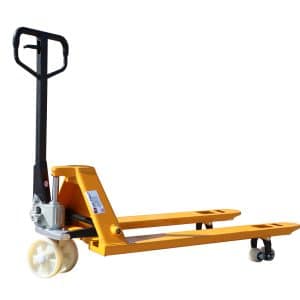
Pallet jacks are material-handling tools used to lift and move palletised goods through warehouses, factories, retail stockrooms, distribution centres and other industrial environments. Also known as pallet trucks, pallet trolleys or hand pallet trucks, they help teams move loads over short distances with greater control and less manual handling.
East Elite supplies pallet jacks for businesses across South Africa, including manual, electric and specialised models for different operating conditions. The right equipment depends on factors such as load capacity, lifting height, movement frequency, floor conditions and the amount of working space available.
Choosing suitable equipment can make everyday material handling more efficient while reducing unnecessary strain on operators. The product range above allows businesses to compare available pallet jacks before selecting a model suited to their workload and working environment.
When comparing pallet jack suppliers, businesses should consider more than the equipment alone. A reliable supplier should provide clear product information and practical assistance when matching equipment to a specific application.
Important supplier considerations include:
East Elite helps customers evaluate their material-handling requirements and identify an appropriate pallet jack for their operation.
Pallet jacks support day-to-day material handling wherever palletised goods need to be moved between receiving, storage, production and dispatch areas. Different industries use manual, electric, heavy-duty and rough terrain models based on their loads, working surfaces and frequency of use.
Common applications include:
Using the correct pallet jack can improve material-handling efficiency, reduce unnecessary manual lifting and give operators greater control when moving heavy goods. The equipment should always be matched to the load, terrain and operating environment.
Different types of pallet jacks are designed for specific loads, working environments and levels of daily use. Understanding how manual, electric, high-lift, heavy-duty and rough terrain models differ helps businesses choose equipment suited to their warehouse, factory, retail or industrial operations.
A manual pallet jack, also known as a hand pallet truck or pallet trolley, uses a hydraulic pump controlled through the handle. The operator pumps the handle to raise the pallet slightly off the floor before manually pulling or pushing the load.
These models are commonly used in smaller operations and offer several practical advantages:
They are generally best suited to short-distance pallet movement in retail stockrooms or smaller warehouses.
Electric pallet jacks use a powered motor to assist with lifting and transporting palletised goods. They are ideal for larger facilities where pallets need to be moved frequently or over longer distances.
Key considerations when choosing an electric model include:
These models can significantly reduce operator fatigue and improve efficiency in busy environments such as distribution centres and factories.
Standard pallet jacks are designed for everyday material handling tasks. They lift pallets slightly off the ground so they can be transported across smooth, level surfaces.
They are commonly used for:
These models are a reliable choice for businesses handling standard pallets in indoor environments.
High-lift pallet jacks raise loads to a more accessible working height, making them useful for tasks that require better access to goods.
They are particularly helpful for:
Unlike standard pallet jacks, their primary purpose is improving access rather than transport. Businesses should check lifting height and load capacity before selecting a model.
Heavy-duty pallet jacks are designed for loads that exceed the capacity of standard models. They are commonly used in demanding warehouse, manufacturing and industrial environments where robust construction and higher load ratings are required.
Before choosing heavy-duty pallet jacks, businesses should confirm the maximum load weight, pallet dimensions, floor conditions and required fork specifications.
Rough terrain pallet jacks are designed for use on uneven or outdoor surfaces where standard pallet trucks may struggle.
They typically feature:
These models are suitable for construction sites, agricultural settings and outdoor storage areas where smooth flooring is not available.
Selecting the right pallet jack depends on the loads being handled, the working environment and how frequently the equipment will be used. Reviewing key factors can help ensure safe and efficient material handling.
Check the maximum weight your business needs to move and ensure the pallet jack can safely handle it. The equipment should always operate within its rated capacity.
Standard models may suit everyday tasks, while heavier loads may require a heavy-duty option.
The fork size must match the pallets used in your operation. Incorrect dimensions can affect stability and usability.
Important factors to review include:
Businesses using non-standard pallets should carefully review specifications before purchasing.
A standard pallet jack is suitable for basic transport tasks, while a high-lift model is better for positioning goods at a working height.
The choice depends on whether your operation requires:
The working surface plays a major role in selecting the right pallet jack. Smooth indoor floors are suitable for standard models, while uneven or outdoor areas may require specialised equipment.
Consider:
Manual pallet jacks are suitable for occasional or moderate use, especially over short distances. Electric models are better suited to high-frequency operations.
Businesses should assess:
The layout of your workspace can influence which pallet jack is most practical. Narrow aisles and tight areas may require compact manual models, while larger spaces can accommodate electric equipment.
Different industries have different handling needs. For example:
The type of goods and operating conditions should guide your decision.
Choosing between manual and electric pallet jacks depends on workload and efficiency needs.
East Elite can help businesses compare available models based on load capacity, terrain, frequency of use and specific operational requirements.
A pallet jack is a material-handling tool used to lift and move palletised goods over short distances. Also known as a pallet truck, pallet trolley or hand pallet truck, it is commonly used between receiving, storage, production, picking and dispatch areas.
The forks slide underneath a pallet before the load is raised slightly off the ground. A manual pallet jack uses a hydraulic pump operated through the handle, while an electric pallet jack uses powered controls and a motor.
Once raised, the load can be moved across a suitable surface using the pallet jack’s wheels and steering handle.
A pallet jack price in South Africa depends on the equipment type, rated capacity, construction, fork dimensions, wheel type and additional features.
Manual models may start at approximately R3,000, while electric models may range from around R10,000 to R20,000. Pallet jack prices in South Africa can change, so current product information or a supplier quotation should always be checked.
A 3,000 kg pallet jack price depends on whether the equipment is manual, electric or designed for a specialised application. Construction quality, wheel type, fork dimensions, brand and additional features can also affect the price.
The full product specification should be compared to ensure the equipment is suitable for the intended load and operating environment.
The lifting capacity depends on the specific model. Many standard pallet jacks can handle loads of up to approximately 2,500 kg, while heavy-duty pallet jacks may support 3,000 kg, 5,000 kg or more.
The manufacturer’s rated capacity should always be checked before use, and the stated weight limit should never be exceeded.
Standard pallet jacks are designed primarily for smooth, level indoor surfaces. A rough terrain pallet jack should be considered for gravel, compacted ground, construction sites, farms and outdoor storage areas.
The frame, wheels and rated capacity must be appropriate for the surface and expected load.
Alternatives to pallet jacks include forklifts, stackers, platform trolleys and hand trucks. The right option depends on the load weight, travel distance, required lifting height and working environment.
Forklifts and stackers are generally more suitable when pallets need to be raised to elevated storage levels. Hand trucks and platform trolleys are intended for smaller or lighter goods.
Regular pallet jack maintenance helps keep the equipment reliable and can extend its working life.
Maintenance checks should include:
Damaged or malfunctioning equipment should be removed from use until it has been properly inspected.
Good pallet jack safety begins with operator instruction, regular equipment inspections and correct load handling.
Operators should:
Businesses looking to buy a pallet jack should compare pallet jack suppliers based on product range, equipment specifications, service quality, warranty information and customer support.
Reliable suppliers should provide clear information about load capacity, fork dimensions, terrain suitability and manual or electric operation. Comparing trusted brands and appropriate product specifications can help businesses choose suitable equipment rather than deciding based only on price.
East Elite can help customers compare available models and select pallet jacks suited to their loads, workplace and operational requirements.
Call us on 011 913 8042