
Showing all 10 results
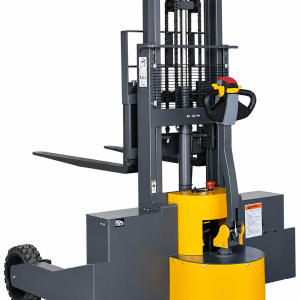
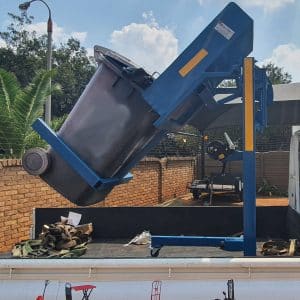

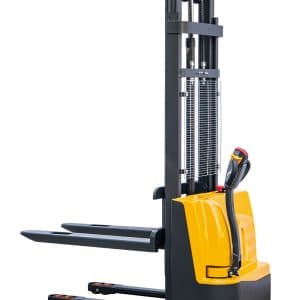


For warehouse managers, logistics operators, and industrial facilities in South Africa, pallet stackers are efficient material-handling devices engineered to lift and move pallets through narrow aisles, loading bays, and storage racks. These versatile lifting machines operate via manual hydraulics or electric motors to safely raise heavy goods to 3.5 meters. By replacing manual lifting, businesses reduce workplace injuries, optimise vertical space, and increase throughput. Explore our high-performance range of pallet stackers for sale, from manual pallet stackers to fully electric pedestrian stackers, built to meet your facility’s exact operational demands.
Operating as an essential material handling device, a pallet stacker combines vertical lifting capabilities with compact navigation. In facilities across South Africa where space optimisation is critical, utilising a stacker machine allows operators to safely lift and move pallets into high-density racking. Transitioning from manual handling to dedicated warehouse equipment dramatically accelerates load turnaround times while reducing physical strain and workplace injuries.
They are essential material-handling tools used in warehouses to lift, move, and stack pallets efficiently. They streamline operations, optimise storage space, and enhance workplace safety.
Pallet lifters help reduce physical strain, improve productivity, and ensure safer handling of goods in busy environments.
| Stacker Type | Best For | Typical Load Capacity | Lifting Height Range | Operation Style |
|---|---|---|---|---|
| Manual Pallet Stacker | Light-duty tasks & occasional use | 500 kg – 2,000 kg | 1.6 m – 3.0 m | Hand/Foot Hydraulic Pump |
| Semi-Electric Stacker | Medium-duty stacking & tight budgets | 1,000 kg – 1,500 kg | 1.6 m – 3.5 m | Electric Lift / Manual Push |
| Fully Electric Stackers | High-frequency & heavy-duty operations | 1,200 kg – 2,000 kg | 2.0 m – 3.5+ m | Fully Motorised Lift & Drive |
Warehouse stackers often work alongside manual pallet jacks to handle versatile tasks effectively.
Our lifters are engineered for durability, safety, and precision. With customisable options, competitive pricing, and tailored solutions for industries like retail, logistics, and manufacturing, we ensure your operations run smoothly.
Choosing the ideal pallet lifter or stacker machine requires evaluating several critical factors, including your required load capacity, vertical lifting height, operational environment (such as aisle width and floor surface), and overall budget considerations. Our engineered units deliver key advantages across industrial applications:
Invest in performance and reliability with our versatile range of stackers! For lower-level horizontal transport, pair your stacker with our heavy-duty pallet jacks to create an end-to-end material handling system.
To maximise the operational lifespan of your equipment and guarantee workplace safety, routine maintenance of your manual pallet stackers is essential. Following a structured service schedule prevents unexpected breakdowns, protects operator health, and keeps your facility running efficiently.
Before placing any manual stacker into operation at the start of a shift, operators must conduct a brief visual and functional check. Do not operate the stacker if any defects are found. Immediately remove the unit from service, tag it out, and submit a report for professional assessment and repair.
Routine monthly care addresses everyday operational wear and tear to maintain peak performance:
(Must be performed by a qualified technician or certified equipment service provider)
An in-depth annual service ensures structural integrity, hydraulic health, and compliance with industrial safety standards:
Standard maintenance schedules apply to clean, dry, indoor warehouse environments under normal usage. For stackers operating under continuous heavy usage, or in harsh environments—such as cold storage, wet environments, dusty areas, or exposure to corrosive chemical agents, service intervals should be increased to every 3 to 6 months based on usage intensity.
A pallet stacker is a compact material handling device designed to lift, move, and stack loaded pallets vertically in warehouses, stockrooms, and manufacturing facilities. Electric stackers use battery-powered drive motors and hydraulic lifting systems for effortless operation, while manual stackers rely on foot- or hand-operated hydraulic pumps for lighter tasks.
Manual pallet stackers are low-cost units best suited for light-duty or occasional lifting. They rely on physical hydraulic pumping to raise loads. Electric stackers feature motorised lifting and drive capabilities, drastically reducing operator fatigue and increasing speed, making them ideal for high-volume, heavy-duty warehouse applications.
With proper routine maintenance, a high-quality pallet stacker's lifespan typically ranges between 5 and 10 years in regular warehouse environments. Manual models often last longer due to fewer electrical components, whereas electric stackers require regular battery care and electrical inspections to reach maximum operational longevity.
Pallet stacker pricing in South Africa varies based on load capacity, lift height, and power source. Entry-level manual stackers generally range from R12,000 to R25,000, semi-electric units cost between R35,000 and R65,000, while fully electric pedestrian stackers range from R75,000 to R150,000+ depending on specifications.
Routine pallet stacker maintenance includes checking hydraulic fluid levels, inspecting lifting chains for wear, lubricating wheels and pivot points, and checking frame welds. For electric stackers, monthly battery water top-ups, terminal cleaning, and motor performance checks are essential to prevent costly operational downtime.
Essential pallet stacker safety features include built-in load guards, emergency stop buttons, automatic braking mechanisms, and anti-roll devices to prevent accidental movement. Electric models often incorporate speed-limiting controls during cornering and ergonomic tiller heads to protect operators from pinch points and repetitive strain injuries.
Pallet stackers are engineered primarily for indoor use on flat, smooth concrete surfaces. However, heavy-duty or specialised all-terrain electric stackers equipped with polyurethane or pneumatic tyres can operate outdoors on smooth, paved yards with flat gradients.
Investing in an electric pallet stacker for sale in South Africa improves vertical space utilisation without the high purchase and maintenance costs of a standard forklift. Stackers easily manoeuvre through narrow warehouse aisles, accelerate loading turnover, and help local industrial businesses satisfy stringent workplace safety compliance standards.
Call us on 011 913 8042